The Handbreak (Issue 11)

How the version of them in your head becomes the version you get.

Welcome to The Relationship Code. This is where I go deeper than a 60 second post can. One relational pattern, pulled apart to the code underneath it, every Sunday. Influence, attraction, and presence. At work and at home.


They come home with an idea. Something new they want to try. Before they've finished saying it out loud, you've already run the version where it doesn't quite work. Your face doesn't move much. They see it anyway.

Q3 planning. You look at the direct report you've been managing carefully and realise the version of them you've been managing to stopped updating a while back. You've been the ceiling.

Your teenager. The one you've been describing to friends the same way for two years. They've heard it. Not the words. The frequency you use when you say their name.

The handbrake was never on you. It's on the people around you.


You may have seen the sales version of this on Friday. Seligman's MetLife data. Optimists outsold pessimists by thirty-seven percent, and a group hired for optimism alone outsold the ones who passed the sales exam by fifty-seven percent. Optimism outsold ability.


The numbers on optimism about OTHER people are older, cleaner, and more uncomfortable.


Robert Rosenthal and Lenore Jacobson ran the classic study in 1968. Elementary school. Teachers were told a group of students had scored high on a hidden test for growth potential. The students had actually been chosen at random. Eight months later, those students had genuinely bloomed. Higher IQ gains. Stronger performance across the board.


The teachers had been told nothing true. They had just believed. That changed how they spoke, how long they waited for an answer, how much room they left. The students grew into it.


They call it the Pygmalion effect. And the story didn't end in the classroom.


Believed in on day one. Bloomed by month eight.


By 2000, Brian McNatt had meta-analysed seventeen workplace field studies of the same effect. Leaders' expectations of their team members measurably shifted the team members' performance. Off the schoolyard, in the offices. The effect held.


Then Google. In 2015, their people team spent two years studying a hundred and eighty of their own teams to find what actually predicted high performance. The winner was psychological safety, the construct Amy Edmondson had been building at Harvard Business School since the late nineties. It measures whether the people around you feel safe to speak up without being judged small. It's what optimism about your team looks like in practice.

The most recent large-scale replication was published in Nature in 2019. David Yeager and his team ran a US national trial with nearly twelve thousand five hundred ninth graders. A short intervention on how their brains could grow shifted the trajectories of the students most at risk. Peer-reviewed at Nature. Modern as it gets.

Two 25-minute online sessions on how the brain can grow.

Biggest gains for the students who needed them most.

The handbrake was never on you. It's on the people around you.


Sandra Murray and her team ran the intimate version. Couples were asked to rate themselves and their partners on the same traits. The people who saw their partner more positively than the partner saw themselves had happier, more stable relationships across years. The idealisation was measurable. Partners grew into it.


Same finding across teachers, workplaces, teams, and couples.

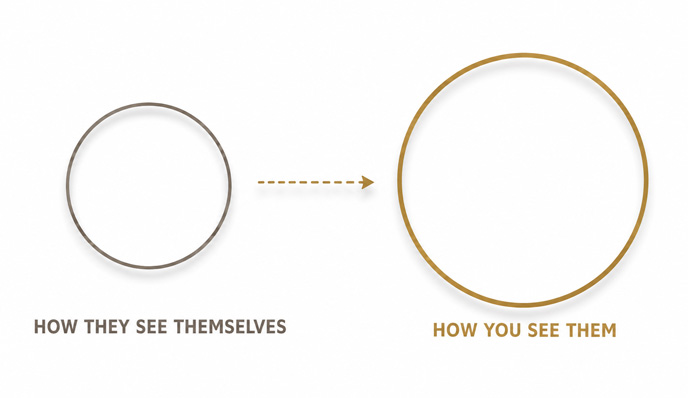
You've been the ceiling. The four holds move you out from underneath it.


FRAMEWORK


The Handbreak
Four moves, run on the person opposite you.

1. Hold the emotion. The frustration. The fatigue. The version of them you filed a while ago and haven't updated. Carry the whole weight of it and process it. It doesn't get to drive the way you speak to them.

2. Hold the vision. Of who they're becoming, not the version of them you filed six months ago. Their capacity has moved. Yours has to move with it.

3. Hold the faith. That their capacity is greater than what you've been letting yourself see. Your image of them was set by an old snapshot. It's out of date.

4. Bolt it to execution. Treat them like the person you now see. The way you speak. The questions you ask. The room you leave for them to answer.

Applied to the person opposite you.


Back to the partner across the dinner table.
Hold the emotion. The version of them you filed months ago. Carry the weight of it and process it. Don't dress it up as realism.

Hold the vision. The version of them that showed up in year one. The version you married.

Hold the faith. That they have another version left in them, and that the version of them you filed has been part of what's flatlined it.

Bolt it to execution. One question at dinner tonight that only their better version would get asked. Ask it.

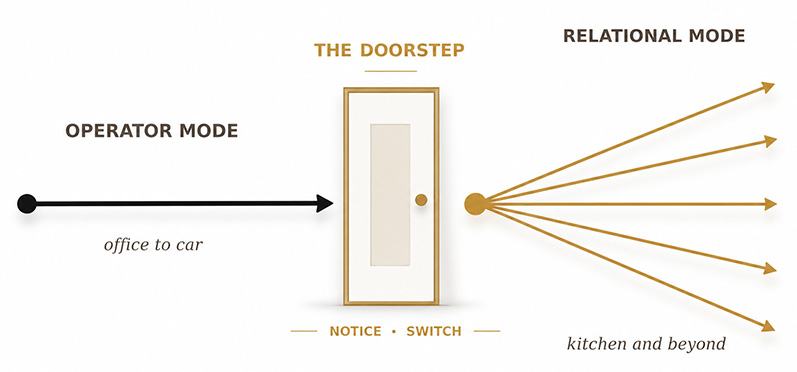
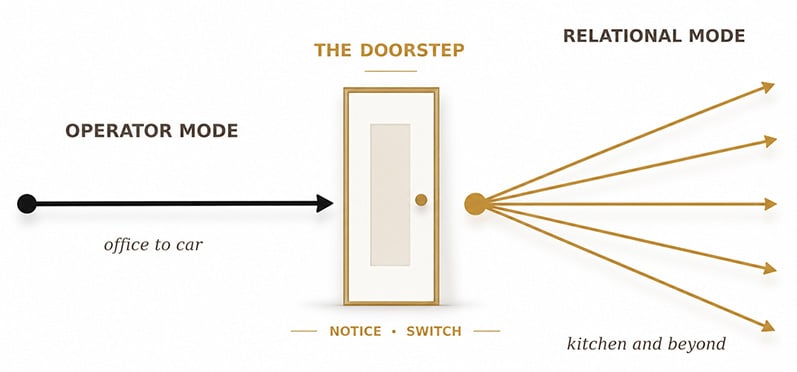
Same four moves for the direct report on Monday morning. Same four moves for the teenager on the way to school.

The Takeaway Code

In a nutshell. Fifty years of data across classrooms, workplaces, teams, and couples say the same thing. What you believe about someone shapes what they become. The version of the people around you that's been running in your head has been a self-fulfilling ceiling. The four holds move you off it.

The move. Pick one person you've been running an outdated version of in your head. Write down the version you filed. Then write the version you can actually see now, unedited. Ask one question this week that only the second version would get. Watch what comes back.


Release the handbrake on them. Watch what they become.


YOUR TURN


What would you want pulled apart next? Hit reply and tell me. I read every one.


Until the next code. Different scene, another pattern pulled apart.


Championing your success,
Anna Garcia
and the Coach HQ Team


SOURCES


Rosenthal & Jacobson (1968), Pygmalion in the Classroom, the classic study on teacher expectations · McNatt (2000), Journal of Applied Psychology, meta-analysis of Pygmalion effects in workplace field studies · Edmondson (2018), The Fearless Organization, psychological safety and team performance (operationalised in Google's Project Aristotle, 2015-16) · Yeager et al. (2019), Nature, national US growth-mindset trial with nearly 12,500 ninth graders · Murray, Holmes & Griffin (1996), positive illusions in romantic relationships · Seligman & Schulman (1986), the MetLife study bridged from Friday.


Not a member yet?


Find the ceiling you've been putting on them


Book a 20 minute complimentary consultation with Erika from my team. We name the version of the person in front of you that's been running in your head, and what it's been costing you both.


COMPLIMENTARY • CONFIDENTIAL


If the same person keeps showing up smaller than you know they can, this is the honest first step.


👉🏼  Book a Consultation  👈🏼

Back to List