
The Doorstep (Issue 12)
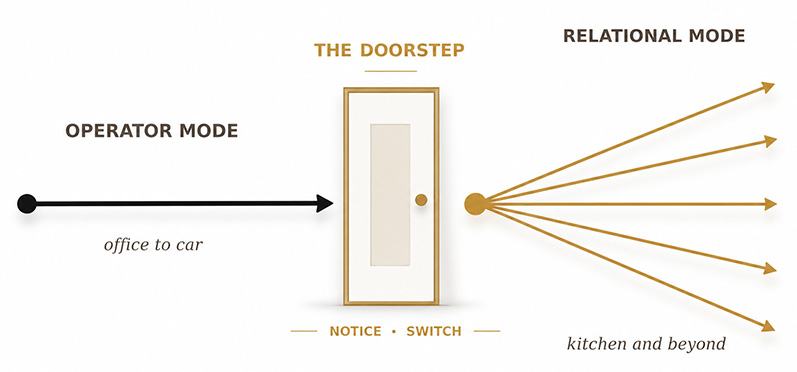
The move that decides whether Monday morning arrives with residue or with room. Welcome to The Relationship Code. This is where I go deeper than a 60 second post can. One relational pattern, pulled apart to the code underneath it, every Sunday. Influence, attraction, and presence. At work and at home. Sunday night. 7pm. You walk through the door. You've been on a single rail for nine hours. Strategy. Decisions. Execution. Your brain has been narrowed to one line all day, and that's how it stayed sharp. Your partner has been on diffuse awareness since the school run. Kids. Dog. Shopping. The temperature of the room. The mood of every person who's walked through it. Two operating systems. Same kitchen. You've walked in on a translation problem. Alison Armstrong calls this single focus versus diffuse awareness. The biological wiring is real. Hormones set the defaults. Testosterone-heavy brains narrow. Oestrogen-heavy brains broaden. That's the textbook version. Here's the reframe that makes this actually useful for a leader. Single focus and diffuse awareness are not genders. They are modes. A female CEO on quarterly close is on single focus. Her partner on kids duty since 4pm is on diffuse awareness. A male founder on a run of investor meetings is on single focus. His partner running the household is on diffuse awareness. Swap it any way you like. The mode is the mode. David Deida named this in 1997. Masculine consciousness runs single-pointed. Feminine consciousness runs multi-radiant. Either mode, in any body, on any day. Two modes. One threshold. Different operating systems on either side. John Gottman has spent four decades studying couples in his Love Lab at the University of Washington. The single strongest predictor of whether a relationship lasts ten years is what he calls turning towards bids. A bid is any small reach for connection. A look. A comment about the news. A hand on the shoulder as you pass. Couples heading for divorce turned towards each other's bids thirty three per cent of the time. Couples that stayed together turned towards eighty six per cent of the time. Percentage of partner bids turned towards, tracked across years. Here's the translation problem. When you're on a single rail, you don't see the bid. They reached. You didn't notice. Repeat that for six months and they stop reaching. You wonder where the warmth went. The residue rides with you into Monday morning. Klein and Boals, Journal of Experimental Psychology, showed that unresolved emotional processing takes a measurable bite out of working memory the next day. The friction you didn't translate on Sunday night is the bandwidth you're missing on Monday morning. Every intrusive thought is a background process eating your RAM. This isn't a couples-therapy problem. It's a bandwidth problem. The move happens before the door opens. FRAMEWORK The Doorstep One move. Done between the office and kitchen. two beats. Notice. Which mode am I in right now? Which mode is the person on the other side of that door in? Ask before you walk through it. Most leaders skip this step. Almost nobody is in the same mode as the person they're about to meet. Switch. Whatever your commute is, use it. Two minutes of breath in the car. A song you only play between work and home. A phrase you say to yourself at the doorstep. Process what the day left in you. Then set it down. You're telling your nervous system: we're changing modes now. Not a protocol. One switch, on the threshold. The doorstep is not just the doorstep. Board meeting at 9am on Monday. You've been on relational mode with the kids since 6am. Use the drive in to switch. Two minutes of breath. A phrase. By the time you sit down at the table, you're on operator mode. Not when you speak. Before. Difficult conversation with a direct report at 3pm. You've just come out of an hour of narrow, tactical, single-focus work. If you walk into that conversation on the same rail you left the last meeting on, you will miss every bid they make. Switch first. Same skill. Same threshold. Every door is a doorstep. The Takeaway Code In a nutshell. Forty years of Gottman data say the same thing. What keeps a relationship warm is how often you turn towards the small bids. And you can't turn towards what you can't see. Single focus makes the bids invisible. The doorstep is where you change modes, before the room does it for you. The move. Pick your next mode transition this week. Work to home. Home to work. One meeting to the next. Do the switch on the threshold, not in the room. Two beats. Notice which mode you're in. Switch before you enter. Watch what the next person you meet does with the version of you that walks in. One switch, on the threshold. Watch the whole night change. YOUR TURN What would you want pulled apart next? Hit reply and tell me. I read every one. Until the next code. Different scene, another pattern pulled apart. Championing your success, Anna Garcia and the Coach HQ Team SOURCES Armstrong (2013), The Queen's Code, single focus and diffuse awareness as biological defaults · Deida (1997), The Way of the Superior Man, masculine as single-pointed and feminine as multi-radiant, in any body · Gottman (1994), Why Marriages Succeed or Fail, the first four minutes of a hard conversation as ninety six per cent predictive · Gottman & Levenson (1992), Journal of Personality and Social Psychology, physiological flooding in marital conflict · Gottman & Driver (2005), coding system for daily bids, eighty six per cent vs thirty three per cent turning towards · Klein & Boals (2001), Journal of Experimental Psychology: General, intrusive thinking and working memory capacity. SATURDAY 1 AUGUST • APPLICATIONS OPEN The Relationship code • Live A one-day immersive, online. The frameworks I usually only run with private clients, in the room with you. Where the newsletter goes an inch deep, the Live goes a mile. "Peace at home is the infrastructure of leadership." As a reader of The Relationship Code you've been shortlisted. Applications are now open, and spaces are limited. 👉🏼 Book a Consultation 👈🏼
Read MoreThe Handbreak (Issue 11)
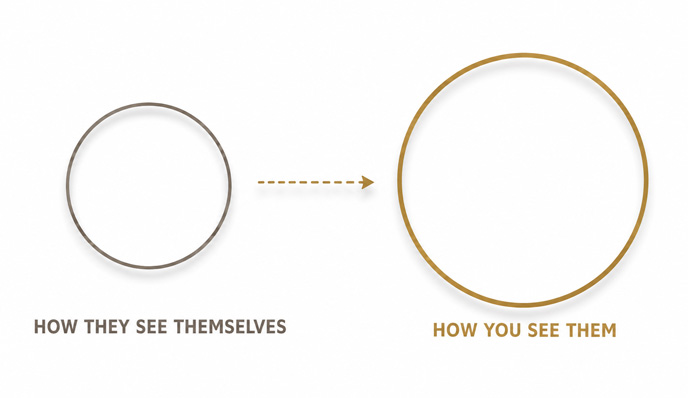
How the version of them in your head becomes the version you get. Welcome to The Relationship Code. This is where I go deeper than a 60 second post can. One relational pattern, pulled apart to the code underneath it, every Sunday. Influence, attraction, and presence. At work and at home. They come home with an idea. Something new they want to try. Before they've finished saying it out loud, you've already run the version where it doesn't quite work. Your face doesn't move much. They see it anyway. Q3 planning. You look at the direct report you've been managing carefully and realise the version of them you've been managing to stopped updating a while back. You've been the ceiling. Your teenager. The one you've been describing to friends the same way for two years. They've heard it. Not the words. The frequency you use when you say their name. The handbrake was never on you. It's on the people around you. You may have seen the sales version of this on Friday. Seligman's MetLife data. Optimists outsold pessimists by thirty-seven percent, and a group hired for optimism alone outsold the ones who passed the sales exam by fifty-seven percent. Optimism outsold ability. The numbers on optimism about OTHER people are older, cleaner, and more uncomfortable. Robert Rosenthal and Lenore Jacobson ran the classic study in 1968. Elementary school. Teachers were told a group of students had scored high on a hidden test for growth potential. The students had actually been chosen at random. Eight months later, those students had genuinely bloomed. Higher IQ gains. Stronger performance across the board. The teachers had been told nothing true. They had just believed. That changed how they spoke, how long they waited for an answer, how much room they left. The students grew into it. They call it the Pygmalion effect. And the story didn't end in the classroom. Believed in on day one. Bloomed by month eight. By 2000, Brian McNatt had meta-analysed seventeen workplace field studies of the same effect. Leaders' expectations of their team members measurably shifted the team members' performance. Off the schoolyard, in the offices. The effect held. Then Google. In 2015, their people team spent two years studying a hundred and eighty of their own teams to find what actually predicted high performance. The winner was psychological safety, the construct Amy Edmondson had been building at Harvard Business School since the late nineties. It measures whether the people around you feel safe to speak up without being judged small. It's what optimism about your team looks like in practice. The most recent large-scale replication was published in Nature in 2019. David Yeager and his team ran a US national trial with nearly twelve thousand five hundred ninth graders. A short intervention on how their brains could grow shifted the trajectories of the students most at risk. Peer-reviewed at Nature. Modern as it gets. Two 25-minute online sessions on how the brain can grow. Biggest gains for the students who needed them most. The handbrake was never on you. It's on the people around you. Sandra Murray and her team ran the intimate version. Couples were asked to rate themselves and their partners on the same traits. The people who saw their partner more positively than the partner saw themselves had happier, more stable relationships across years. The idealisation was measurable. Partners grew into it. Same finding across teachers, workplaces, teams, and couples. You've been the ceiling. The four holds move you out from underneath it. FRAMEWORK The Handbreak Four moves, run on the person opposite you. 1. Hold the emotion. The frustration. The fatigue. The version of them you filed a while ago and haven't updated. Carry the whole weight of it and process it. It doesn't get to drive the way you speak to them. 2. Hold the vision. Of who they're becoming, not the version of them you filed six months ago. Their capacity has moved. Yours has to move with it. 3. Hold the faith. That their capacity is greater than what you've been letting yourself see. Your image of them was set by an old snapshot. It's out of date. 4. Bolt it to execution. Treat them like the person you now see. The way you speak. The questions you ask. The room you leave for them to answer. Applied to the person opposite you. Back to the partner across the dinner table. Hold the emotion. The version of them you filed months ago. Carry the weight of it and process it. Don't dress it up as realism. Hold the vision. The version of them that showed up in year one. The version you married. Hold the faith. That they have another version left in them, and that the version of them you filed has been part of what's flatlined it. Bolt it to execution. One question at dinner tonight that only their better version would get asked. Ask it. Same four moves for the direct report on Monday morning. Same four moves for the teenager on the way to school. The Takeaway Code In a nutshell. Fifty years of data across classrooms, workplaces, teams, and couples say the same thing. What you believe about someone shapes what they become. The version of the people around you that's been running in your head has been a self-fulfilling ceiling. The four holds move you off it. The move. Pick one person you've been running an outdated version of in your head. Write down the version you filed. Then write the version you can actually see now, unedited. Ask one question this week that only the second version would get. Watch what comes back. Release the handbrake on them. Watch what they become. YOUR TURN What would you want pulled apart next? Hit reply and tell me. I read every one. Until the next code. Different scene, another pattern pulled apart. Championing your success, Anna Garcia and the Coach HQ Team SOURCES Rosenthal & Jacobson (1968), Pygmalion in the Classroom, the classic study on teacher expectations · McNatt (2000), Journal of Applied Psychology, meta-analysis of Pygmalion effects in workplace field studies · Edmondson (2018), The Fearless Organization, psychological safety and team performance (operationalised in Google's Project Aristotle, 2015-16) · Yeager et al. (2019), Nature, national US growth-mindset trial with nearly 12,500 ninth graders · Murray, Holmes & Griffin (1996), positive illusions in romantic relationships · Seligman & Schulman (1986), the MetLife study bridged from Friday. Not a member yet? Find the ceiling you've been putting on them Book a 20 minute complimentary consultation with Erika from my team. We name the version of the person in front of you that's been running in your head, and what it's been costing you both. COMPLIMENTARY • CONFIDENTIAL If the same person keeps showing up smaller than you know they can, this is the honest first step. 👉🏼 Book a Consultation 👈🏼
Read MoreThe Future Self Letter (Issue 10)

Ten minutes a quarter. The leader you're becoming, on paper. Welcome to The Relationship Code. This is where I go deeper than a 60 second post can. One relational pattern, pulled apart to the code underneath it, every Sunday. Influence, attraction, and presence. At work and at home. The leader you'll be in five years already knows what you should start today, what's draining you that you haven't named, and which decision in front of you right now is the important one. The hard part is hearing them. A pen makes it possible. You usually know what to do. You just can't hear yourself from where you're standing. The future self letter moves your standing point. The pen is the time machine. Hal Hershfield, UCLA, has spent fifteen years showing that people who feel vivid about their future self make demonstrably better long-term decisions. They save more. They lead longer. They make fewer of the calls they'd regret later. The mechanism is identity. Future-you feels like a stranger to current-you, so current-you discounts their wellbeing the same way you'd discount a stranger's. The work is making them familiar. Hershfield's lab showed people age-progressed images of themselves, the older face their twenty-five-year-old face would become. The ones who saw their older face went on to double their hypothetical retirement contributions. The image collapsed the distance between current-you and future-you. A second study found that people with low future-self continuity were more likely to make unethical business decisions. Their future selves felt like strangers. They weren't protecting them. Bartels and Urminsky found people with higher future-self continuity discount the future less, and therefore choose for the longer term more often. The future stops being something that happens to you. It becomes you, later. The published lab work uses visual interventions because age-progressed images collapse the distance fast. A letter does the same job, with a pen, by making you write in their voice. You're remembering forward. Here's how to write it. Pick a horizon first. 12 months out for a current decision with annual-cycle consequences. A new role. A family choice. A project commitment. 5 years out for an identity-level decision. A career pivot. An exit. A relationship choice. An investment of a decade of your life. Date the letter from that future date. Write at the top: Dear [your name], it's [future date]... Then three blocks. Ten minutes total. FRAMEWORK The Future Self Letter Block 1. Three minutes. "I'm so glad you started..." Future-you writes about the one thing current-you started that paid off. Not a generic self-care line. A specific behaviour, decision, conversation, or boundary that compounded. Name it. Block 2. Three minutes. "I wish you had stopped sooner..." Future-you writes about the one thing current-you was still doing that drained the next phase. The relationship pattern. The yes you kept giving. The cheque you kept signing. Name it from their perspective, kindly. Block 3. Four minutes. "The decision that changed everything was..." Future-you writes about the single decision current-you made, or is about to make, that shifted the trajectory. Be specific about the decision, the moment, what current-you was afraid of, and what made them do it anyway. The pen is the time machine. The cadence is quarterly. Four letters a year, ten minutes each. Forty minutes of writing, and the leader you're becoming has been in the room with you all year, on paper. You can also write one off the cycle, around a single big decision. The horizon is whatever the decision's horizon is. The blocks stay the same. One thing future-you almost always says, in my experience reading these with clients. They wish you had started talking to them sooner. The Takeaway Code In a nutshell. Fifteen years of UCLA research show that people who feel vivid about their future self make better long-term decisions. The mechanism is identity, not motivation. A letter written from future-you, in their voice, collapses the distance the same way the lab's age-progressed images do. The move. Pick your horizon. Twelve months for a current decision, five years for an identity decision. Date the letter from that future date. Ten minutes. Three blocks. I'm so glad you started. I wish you had stopped sooner. The decision that changed everything was. Write back from the future. The pen does the rest. YOUR TURN What would you want pulled apart next? Hit reply and tell me. I read every one. Until the next code. Different scene, another pattern pulled apart. Championing your success, Anna Garcia and the Coach HQ Team SOURCES Hershfield et al. (2011), Journal of Marketing Research 48(SPL), age-progressed renderings and retirement saving · Hershfield, Cohen & Thompson (2012), Organizational Behavior and Human Decision Processes, future-self continuity and unethical decisions · Bartels & Urminsky (2011), Journal of Consumer Research, future-self continuity and the discount rate · Hershfield (2023), Your Future Self: How to Make Tomorrow Better Today. Not a member yet? Hear the leader you're becoming Book a 20 minute complimentary consultation with Erika from my team. We name the decision in front of you, find the horizon it's sitting on, and walk through what future-you needs current-you to do. COMPLIMENTARY • CONFIDENTIAL If you've been sitting with a big call for more than a month, this is the honest first step. 👉🏼 Book a Consultation 👈🏼
Read MoreThe Red Card Moment (Issue 1)

Why the smartest leaders get this one backwards at home. Welcome to The Relationship Code. This is where I go deeper than a 60 second post can. One relational pattern, pulled apart to the code underneath it, every Sunday. Influence, attraction, and presence. At work and at home. If you caught the video today, you've seen the scene. Here's beyond what 60 seconds could hold. Picture this. A guy on the sofa, team shirt on, match day. His team is playing brilliantly. The stadium noise is coming through the TV so loud he's basically there. He's up, arms in the air, roaring at 40,000 mates he's never met. Then she comes down the stairs. Stands behind the sofa. Soft voice. "Can I have a word." On screen, the referee reaches into his pocket. The commentator cuts through the stadium noise. "And it's red. Off he goes." Except it wasn't on the pitch. TV off. She sits down. End of scene. If you've ever been on that sofa, you just winced. If you've ever been at the bottom of those stairs, you're already doing the maths on timing. I've sat in hundreds of versions of this scene. The conversation wasn't the problem. The timing was. The one on the sofa wasn't wrong to want the match. The one at the bottom of the stairs wasn't wrong to want to talk. Both things are true at the same time. But choosing that moment was the football equivalent of walking into a boardroom mid pitch. The conversation was already over. Neither of them knew yet. They committed to it anyway. World Cup is a few months away. Millions of these scenes are already queued up in homes across the country. Some of you are the football fan. Some of you are the one at the bottom of the stairs wondering why "can I have a word" landed like a grenade when you thought it was neutral. In football, a red card means you misread the moment. At home, it's exactly the same. End of scene. FRAMEWORK TLC for leaders at home That conversation was decided before either of them spoke. By three things: Timing. Wrong state. Wrong moment. Wrong season. Walk in wound up from a board meeting and the conversation stops being about what you came for. It becomes about the wound up. Your biology is either on your side or it isn't. Partner on a deadline? A bereavement? A deal closing Tuesday? Most conversations that go sideways got dropped into the wrong season. Wait for a better one. You're allowed to. Location. The room wrote half the outcome before you said a word. The sofa where the last fight happened carries it. The bedroom isn't where finances get sorted. Each life area earns its own scenery. Finances in a cafe. Parenting on a walk. Big decisions off the property. Somewhere no old argument is already sitting at the table. Neutral venue isn't a luxury. It's strategy. Commitment. Know what you're committing to going into the conversation, during the conversation, and after the conversation. One hundred percent responsible on all three. The agreement holds when it gets heavy. No pulling back on a hard day. No quietly shifting your half onto the other person. The weight stays where it was placed. Agree the call. Agree the revisit date. Six months. Q3. Whatever the runway is. Touch it then. Not before. Not after. Apply this and watch what happens. What felt like distance starts to look like connection. What felt like dread softens into something closer to cherish. And the competition you kept finding yourselves in? That turns into fun, looking for a way back into the room. The football fan and his wife have a different story with TLC in play. She waits for the final whistle. In real life, your whistle might be half an hour. Or a week. Or a month. You wait for the moment. Not for the urge. People don't respond to what you say. They respond to what lands. TLC is how it lands. YOUR TURN What would you want pulled apart next? Hit reply and tell me. I read every one. Until the next code. Different scene, another pattern pulled apart. Championing your success, Anna Garcia and the Coach HQ Team Not a member yet? Book a 20 minute complimentary consultation with Erika from my team. If you hold a boardroom and lose a dinner table, she'll name the pattern that runs underneath it. COMPLIMENTARY • CONFIDENTIAL If any of this looked like your own house, this is the honest first step. 👉🏼 Book a Consultation 👈🏼
Read MoreThree Clocks (Issue 2)
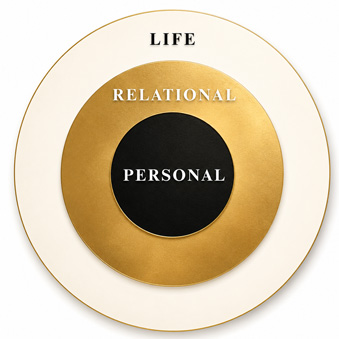
Why the same conversation can land or detonate, and rarely because of the words. Welcome to The Relationship Code. This is where I go deeper than a 60 second post can. One relational pattern, pulled apart to the code underneath it, every Sunday. Influence, attraction, and presence. At work and at home. Same conversation. Same words. Different night. One lands. One detonates. It was the clocks the whole time. There's no such thing as one timing at home. There are three. They run at the same time. They rarely agree. You read every room at work. At home, you read only one thing. The conversation. The words. The tone. The face in front of you. But that conversation was already decided before either of you spoke. By which clock was running underneath it. Three clocks. Always running. Rarely on the same beat. Framework The Three Clocks Every conversation at home is decided by three clocks running at once: Personal. Your levers. Sleep. Hydration. Sugar. Nervous system state. The conversation lands or detonates depending on what your body was already running before it began. The leader on three hours of sleep does not have a communication problem. They have a personal clock problem dressed up as one. Most relational tension at home gets blamed on the relationship. Half of it was set in the body before either person spoke. THE SHIFT Sort the body before you sort the conversation. • • • Relational. When the personal clock is steady, you get patience. Articulation. The capacity to receive without already preparing your defence. Dysregulation is the silent driver of most distance at home. Two regulated nervous systems can have a hard conversation. Two dysregulated nervous systems cannot have an easy one. Find the thermostat. Find the conversation. THE SHIFT Calm both systems first. The conversation second. • • • Life. Where you are in your life. Where they are in theirs. Stages do not synchronise. Force someone past the stage they are in and you do not promote them. You collapse them. The masculine brain develops in stages. The feminine brain adapts to the season. Both are real. Comparing journeys is the wrong clock entirely. The right question is never “where should you be by now.” It is “what stage is this, and what does this stage need.” THE SHIFT Meet them where they are. Not where you want them to be. The three clocks underneath every conversation at home. Stack the three and watch what happens. Conversations stop being random. The same word that detonated last week lands this week, because you can see the clocks running before you say it. The relationship stops being a thing that happens to you. It becomes something you can read. What looked like distance starts to look like timing. What looked like resistance starts to look like a stage. And the drama you kept blaming on the relationship? It was always a thermostat that needed naming. The leader who reads every room at work walks into the kitchen and reads only the conversation. The conversation was the last thing to arrive. The clocks were running long before it. Timing isn't a moment. It's three clocks running at once. People don't react to what you say. They react to the clock you're on. Until the next code. Different scene, another pattern pulled apart. Championing your success, Anna Garcia and the Coach HQ Team Not a member yet? Find out which clock is off Book a 20 minute complimentary consultation with Erika from my team. If something at home keeps detonating and you can't see why, we'll name the clock that's running underneath it. COMPLIMENTARY • CONFIDENTIAL If any of this looked like your own house, this is the honest first step. 👉🏼 Book a Consultation 👈🏼
Read MoreBreaking Your Sabotage Loop (Issue 3)
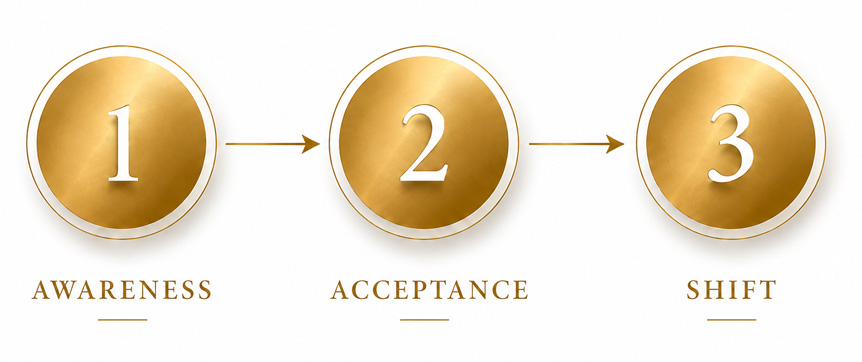
Why momentum keeps slipping. And the way out. Welcome to The Relationship Code. This is where I go deeper than a 60 second post can. One relational pattern, pulled apart to the code underneath it, every Sunday. Influence, attraction, and presence. At work and at home. You've been there. Things start landing. The salary you'd been working towards. The relationship that's actually steady. The pipeline that's moving. The version of life you've been building for years actually starts arriving. And then. The internal voice gets loud. Doubt where there wasn't any a week ago. Disqualification. Who do you think you are? It leaks into your relationships. You pull away from the people backing you. You pick the fight that protects the old self. You undermine the support around you without quite knowing why. Then it shows up in your circumstances. An opportunity slips. The timing breaks. A meeting moves and never comes back. Each one is the same thing happening in a different room. The pattern that runs when things start working. The old identity fights back when the new identity begins to exceed its expectations. Growth disrupts what feels familiar. It challenges the stories, defenses, and limits we built to protect ourselves. This is why transformation can feel uncomfortable. Confronting. Even painful at times. Most leaders can. Ask. Build. Push. Deliver. What they cannot do is allow themselves to actually have the result. The relationship. The life. That's the wall. • • • Capability is rarely the issue. Permission is. The unconscious ceiling that says, “this much is allowed. No more.” That ceiling is self-worth. What you've quietly decided is your portion of provision, of love, of opportunity. When this work starts working, results begin to outpace what your old identity has authorised. That creates pressure. Sabotage emerges to protect the old self. It shows up everywhere your identity hasn't caught up to the new results yet. What it looks like when results outpace identity. And how to interrupt it. Framework Three Pathways Out Three pathways, in this order. 01 Awareness “What detonates my old patterns?” Notice what triggers the sabotage. Before you can interrupt the loop, you have to name the moments that start it. Where it shows up ⇒ Success starts landing and you reach for “I deserve a break” ⇒ The morning routine quietly drops ⇒ Solitude gets renamed as loneliness ⇒ A commitment you said you'd make doesn't get scheduled ⇒ Guilt walks in and pulls everything down with it 02 Acceptance “Where am I genuinely vulnerable?” Acceptance is naming where you keep falling back. Which environments. Which people. Which conversations. The places that pull you into the old self before you've even noticed. Acceptance is also admitting you need help. Without shame. Where it shows up ⇒ Motivation keeps running out before the week does ⇒ Some environments pull you into the old self before you've sat down ⇒ Some conversations drop you straight into the old version of you. You keep having them ⇒ You need help. The kind you keep insisting you don't 03 Shift “What systems, structure, and environment will support the new identity?” Facing in the same direction as the life you're building. That's the shift. It begins with a decision. To stop indulging the old identity. Then the structure that holds the decision when motivation goes quiet. Where it shows up ⇒ Decide to stop indulging the old identity ⇒ Schedule the behaviour, don't memorise it ⇒ Add alarms, not affirmations ⇒ Choose environment over willpower ⇒ Trust the calendar over the mood Three pathways. In this order. Until the new identity holds. Most people live stuck between awareness and action. The shift is what closes the gap. Motivation doesn't create identity shifts. Structure does. That's the work. That's how the loop breaks. Until the next code. Different scene, another pattern pulled apart. Championing your success, Anna Garcia and the Coach HQ Team Not a member yet? Find out where the loop is closing on you Book a 20 minute complimentary consultation with Erika from my team. We map where the loop is currently active in your week. And name the first structural step that interrupts it. COMPLIMENTARY • CONFIDENTIAL If any of this looked like your own last six months, this is the honest first step. 👉🏼 Book a Consultation 👈🏼
Read MoreThe Ripple (Issue 4)
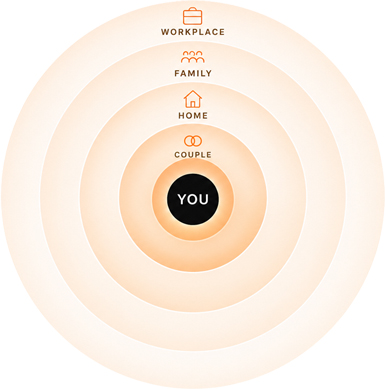
Why the smallest rituals reach the furthest Welcome to The Relationship Code. This is where I go deeper than a 60 second post can. One relational pattern, pulled apart to the code underneath it, every Sunday. Influence, attraction, and presence. At work and at home. Same two mugs. Same two minutes. Same kitchen, every morning. What does the cup of coffee you share every morning have to do with how you show up at 3pm? More than your last leadership programme did. A routine is what gets done. A ritual is what it means. Brushing your teeth is a routine. The cup of coffee you share without needing to say anything is a ritual. Same repetition. Completely different function. A routine runs the household. A ritual runs the relationship. The science is not subtle about this. The Gottman Institute tracked couples for years. The ones still together six years on had turned toward each other's small bids for connection 86 percent of the time. The ones who divorced, 33 percent. Not the big conversations. The small ones. The bid to connect that takes four seconds. Rituals are those bids, made repeatable. • • • It goes deeper than behaviour. It's physical. In a study led by neuroscientist James Coan, women faced the threat of an electric shock inside a brain scanner. When they held their partner's hand, the threat response in the brain measurably dropped. A stranger's hand helped less. And the stronger the relationship, the greater the calming effect. A trusted partner doesn't just feel good. They regulate your nervous system. Rituals are how that trust gets built, and kept. • • • Rituals do something for the individual too. Harvard researchers Michael Norton and Francesca Gino studied what rituals do after a loss. They reduce distress by restoring a sense of control. It held even for people who didn't believe in rituals. You know the version of loss this points to. The deal that fell through. The launch that missed. A ritual is the fixed point you come back to when the week hasn't gone your way. It's still there, whatever happened. • • • It's not just the couple. Barbara Fiese spent fifty years reviewing the research on family rituals. Families built around rituals are more cohesive, and that stability shows up in the children long after they've left home. This is the part leaders underrate. A ritual is a reference point. However badly the week went. However far apart you drifted this month. The ritual is still there, holding the memory of what peace between you actually feels like. Life is busy disconnecting you. The ritual is the thing that keeps bringing you back. It doesn't have to be big. It almost never is. ⇒ The cup of coffee, clinked like a toast, before the day starts. ⇒ The last bite of the meal, passed across the table to the other person. ⇒ The few minutes of quiet, or prayer, before anything else begins. ⇒ The shower before bed. The unspoken signal that the day is closing and the two of you are not. ⇒ Friday film night, the popcorn made at home, the same two spots on the sofa. ⇒ Tuesday date night, the babysitter booked ahead, the one evening that never moves. Small and repeatable. Loaded with a meaning only the two of you can read. A ritual doesn't stay where it started. It ripples. Framework Three Ripple One ritual. Five layers it reaches. 01 Individual It starts with you. A steadier nervous system. A fixed point that holds however the week went. 02 Couple Turning toward becomes the default, not the exception. The small bids get answered. Trust compounds. 03 Home The household starts running on something steadier than mood. Predictability becomes the baseline everyone feels. 04 Family Children read the ritual as safety. It becomes the baseline they carry into their own lives. 05 Workplace The ripple doesn't stop at the front door. A steadier home shows up as a steadier leader. One ritual at the centre. The ripple reaches all the way to work. A 2018 meta-analysis by Zhang and colleagues, nearly a hundred thousand people, found that home and work feed each other. Van Steenbergen and colleagues found it crosses between partners too. Your steadiness raises theirs. Theirs raises yours. The coffee ritual is in the room with you at 3pm. One ritual, kept consistently, is the whole practice. Choose something small enough the busy week can't argue you out of it. Keep it on the weeks you feel like it and the weeks you don't. The ripple does the rest. The ritual looks like the smallest thing you do all day. It reaches the furthest. Until the next code. Different scene, another pattern pulled apart. Championing your success, Anna Garcia and the Coach HQ Team Not a member yet? Find the one ritual worth protecting Book a 20 minute complimentary consultation with Erika from my team. We map where connection is leaking in your week, and what it's costing you. COMPLIMENTARY • CONFIDENTIAL If the busy week keeps negotiating your relationship down the list, this is the honest first step. 👉🏼 Book a Consultation 👈🏼
Read MoreThe Tsunami Reset (Issue 5)

Why high performers carry last week into this week. And how to stop. Welcome to The Relationship Code. This is where I go deeper than a 60 second post can. One relational pattern, pulled apart to the code underneath it, every Sunday. Influence, attraction, and presence. At work and at home. It's Sunday evening. The calendar opens for the week ahead. You haven't even started it, and you can already feel it building. The deadlines, the commitments, the things left unfinished. You haven't let go of last week. You're walking into this one still covered in its seaweed. Most leaders never process. They just proceed. You're relating to the week like you have no control over it. Like a tsunami's about to take you under. The week is just unfolding. The suffering is what you add to it. The week drowning you is full of things you asked for. The career. The family. The responsibility you wanted. Pressure is a privilege. It's what the life you worked for costs. There's a way through. FRAMEWORK The Tsunami Reset One ritual. Five layers it reaches. 01 Process. Before you reach for logic or planning, deal with the emotional residue. Vomit journal what's heavy. The unmet expectations, the disappointments, the overcommitments, the voice saying I can't handle this. Don't dive into the drama of it. Just empty it out. What you don't clear runs you from underneath all week. • • • 02 Evaluate. Now move from emotion to logic. Ask what worked, what didn't, where you overcommitted, what drained you, what regulated you. It's all just data now. Data to build the next week with. • • • 03 Reset. Use the data to rebuild the next week. The rocks go in first. Sleep, movement, family, deep work. The non-negotiables that hold you. If the rocks aren't placed first, the calendar fills with pebbles and sand. Distractions, other people's priorities, reactive decisions you didn't sign up for. The structure is how you own the week, instead of the week owning you. • • • 04 Recommit. Zoom out. Why are you doing any of this? What are you building? You're standing on a rock floating through space, and this week is barely a sneeze in the scale of a life. "You're expanding. It just feels like drowning from the inside." Step three is where most people fall down. Picture your week as the jar. Rocks first. Everything else settles around them. Fill it with sand first, and the rocks never fit. The reset only works when it's repeated. Pick a slot you can defend. Sunday evening. Monday morning. Whenever you're calm enough to think clearly. Run the four steps. Last week stops following you into this one. This one stops following you into the next. You don't need a calmer week. You need a calmer nervous system. Until the next code. Different scene, another pattern pulled apart. Championing your success, Anna Garcia and the Coach HQ Team Not a member yet? Find where the week's weight is collecting Book a 20 minute complimentary consultation with Erika from my team. We map where last week's weight is still showing up in this one, and what it's costing you. COMPLIMENTARY • CONFIDENTIAL If the busy week keeps negotiating your relationship down the list, this is the honest first step. 👉🏼 Book a Consultation 👈🏼
Read MoreThe Grip (Issue 6)

Why gripping tighter is costing you. At work and at home. Welcome to The Relationship Code. This is where I go deeper than a 60 second post can. One relational pattern, pulled apart to the code underneath it, every Sunday. Influence, attraction, and presence. At work and at home. You've done the work. And the results still haven't come. So you do what every high performer does when the payoff is late. You grip tighter. More hours. Tighter control. You chase the thing harder than ever. It feels like discipline. It's scarcity. And scarcity makes everything worse. When the reward runs late, the brain panics. We're wired to discount what's delayed. George Ainslie called it hyperbolic discounting: the longer a payoff takes, the less real it feels, and the harder it is to keep your hands still. The lag itself is the trap. And the grip is expensive. Brooks and Schweitzer put negotiators under pressure and watched anxiety make them fold. Seventeen percent less money than the calm ones. The grasping hand closes worse deals. It narrows you, too. Mullainathan and Shafir showed that scarcity makes the mind tunnel. You fixate on the one thing you lack and lose sight of everything else. You call it focus. There are two ways to move through the wait. FRAMEWORK The Grip Two hands. One move between them. Chasing. The closed fist. You tunnel onto the one thing you're missing and lunge at it. You make weaker moves, and you repel what you reach for. A fist, dressed up as effort. Receiving. The open hand. You hold the long view. You stay disciplined without the desperation. Barbara Fredrickson found that threat narrows what you can see and a calmer state widens it. Where the grip tunnels, the open hand widens. You become available to what you've been chasing, instead of grabbing at it. The move is regulation. You don't think your way from a closed fist to an open hand. Under pressure, the thinking brain goes quiet. Amy Arnsten's neuroscience shows the prefrontal cortex hands control to the reactive brain. So you regulate first. And regulating isn't forcing yourself calm. Jeremy Jamieson found that when people read a racing heart as fuel instead of fear, their bodies steadied and they performed better. You reframe the pressure. The hand opens after. This is the part that costs you most. The same grip that loses the deal loses the relationship. Mikulincer and Shaver call it hyperactivating: when you fear losing someone, you grip harder. You pursue and cling. And the pursuit triggers the very thing you feared. The grasp creates the distance. At work, the grip closes worse deals. At home, it closes the door. You can't grip your way to what you want. The harder you close your hand, the less can land in it. The discipline is in regulating first, then doing the work without the desperation. The results were always going to lag the effort. The open hand is how you survive the lag. The Takeaway Code In a nutshell. What feels like discipline is often scarcity, and the grip that chases the result repels it. At work and at home. The move. Catch one place you're gripping this week. Before you push harder, regulate first. Then act with the open hand. You can't receive with a closed fist. YOUR TURN What would you want pulled apart next? Hit reply and tell me. I read every one. Until the next code. Different scene, another pattern pulled apart. Championing your success, Anna Garcia and the Coach HQ Team SOURCES Ainslie (1975), hyperbolic discounting · Brooks & Schweitzer (2011), anxiety and weaker negotiation outcomes · Mullainathan & Shafir (2013), scarcity and attentional tunneling · Arnsten (2009), acute stress and prefrontal function · Mikulincer & Shaver (2007), attachment-anxiety and pursuit · Jamieson (2012), stress reappraisal and performance · Fredrickson (2001), broaden-and-build. Not a member yet? Find where you're gripping Book a 20 minute complimentary consultation with Erika from my team. We map where the grip is showing up in your week, and what it's quietly costing you. COMPLIMENTARY • CONFIDENTIAL If you're working harder and the results keep slipping further away, this is the honest first step. 👉🏼 Book a Consultation 👈🏼
Read MoreSet To Threat (Issue 7)
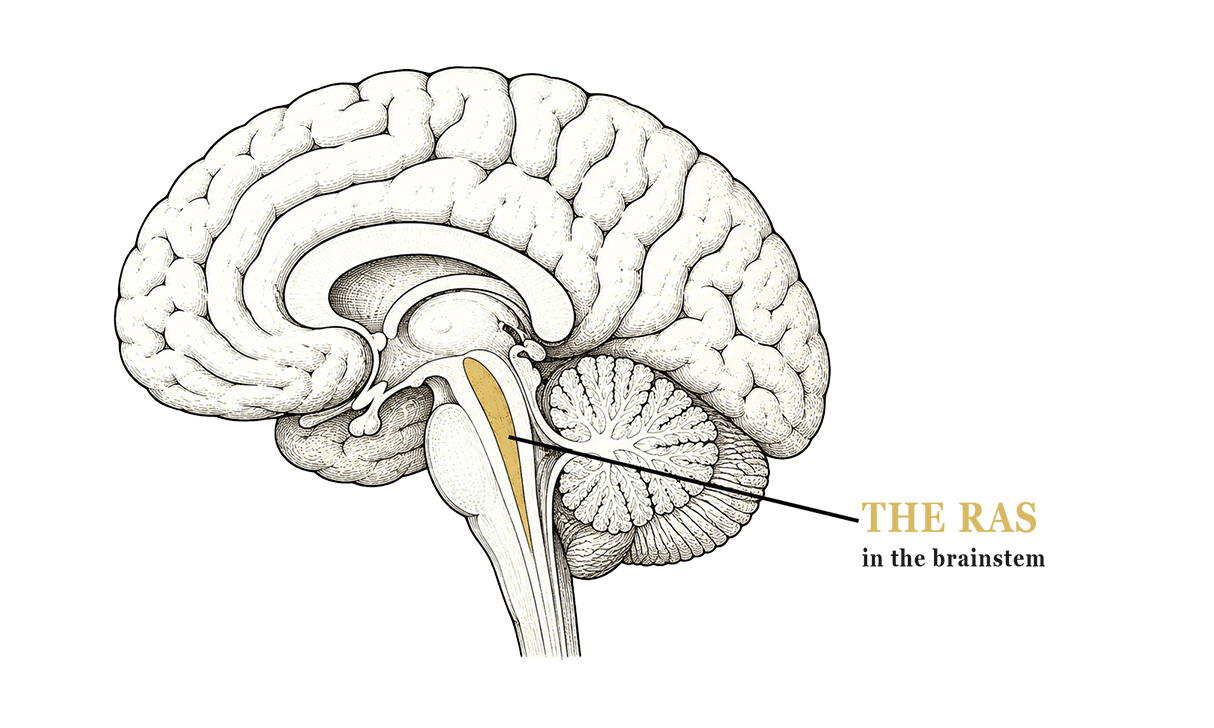
The filter that built your career is the one losing you the relationship. Welcome to The Relationship Code. This is where I go deeper than a 60 second post can. One relational pattern, pulled apart to the code underneath it, every Sunday. Influence, attraction, and presence. At work and at home. You're on the second date. He's eleven minutes late. Your filter clocks it. Underneath, the case is already building. You'll be polite. He'll never know. By dessert you've already decided. Saturday morning, breakfast. She mentions her sister again. Your filter has heard this before. It's already filed. You're not in the conversation anymore. You're in a case file. Tuesday dinner at the kitchen island. Two executives across the table, both reading the room like it's a deal. The whole meal is a low grade negotiation neither of you would admit to. You both go to bed thinking the other one started it. None of that was a choice. Your filter ran the moment for you. That's the asymmetry every high performer eventually faces: a career built on discipline, and a relational life that hasn't caught up. The filter that got you promoted is the one losing you the relationship. In 2023, Shaurya Taran and his colleagues at the Toronto and Montreal anaesthesia teams pulled together what modern neuroimaging now reveals about the system that decides what reaches your awareness. The reticular activating system. Mapped first by Moruzzi and Magoun back in 1949, and imaged in real time today. It sits in the brainstem and acts as a gateway. The reticular activating system, in the brainstem. What it lets through, you experience as your life. Everything else is gone before you ever knew it was there. Daniel Simons and Christopher Chabris proved how aggressive the filter is. They asked people to watch a video of basketballs being passed and count the passes. Halfway through, a person in a gorilla suit walked across the screen, stopped, beat their chest, and walked off. Forty-six percent of viewers never saw the gorilla. The filter let it pass. You don't see what you're not looking for. Even when it's a gorilla beating its chest in the middle of the frame. • • • Here's the part that matters for you. Roy Baumeister and his team reviewed hundreds of psychology studies and found the same pattern in every domain. Bad is stronger than good. Your brain comes set to threat by default, because that's how it kept the species alive. In the boardroom, that setting is what you're paid for. You see the risks others miss before anyone else does. The filter is genius. That filter built your career. At home, untouched, it's been quietly building a case against the person you love. Most leaders never even know the dial is there. FRAMEWORK Set To Threat Three moves that change the setting. Catch the file. Notice when you're cataloguing the person you love instead of being with them. The file loses some of its power the second you can see it for what it is. Idealise on purpose. Sandra Murray and her team found that people who see their partners more positively than even their partners see themselves end up in happier, more stable relationships. The idealisation is self-fulfilling. Partners grow into the image. Look for what's true and what's possible, and the relationship grows toward it. Capitalise on what's right. Shelly Gable found that how you respond to your partner's good news shapes the relationship more than how you respond to bad. When something goes right for them, stop what you're doing, turn toward them, and get genuinely curious. That single move retrains the filter faster than any other. Most leaders never touch the dial. Same three scenes, different filter. On the second date, your filter catches what he did right when he arrived, instead of the eleven minutes before it. You stay curious instead of building a case. Saturday morning, when she mentions her sister, the filter doesn't reach for the file. For the first time you hear what's underneath the words. Tuesday dinner, two executives. One of you puts the deal reading down first. The other one feels the shift. The whole meal turns. Your brain is wired to scan for threat. Your career sharpened that wiring. Nobody ever told you to point it at the person you go to bed beside. You can point it somewhere else. What was demanding bandwidth at home starts producing leverage everywhere else. The Takeaway Code In a nutshell. Your brain has a setting most leaders never touch. It's set to threat because that's what got you promoted. The same setting is quietly running your relationships into the ground. The move. This week, when the person you love shares good news of any size, stop what you're doing, turn toward them, and ask one genuinely curious question about it. Shelly Gable's capitalisation move. The fastest way to start changing the setting. You weren't promoted to come home like this. YOUR TURN What would you want pulled apart next? Hit reply and tell me. I read every one. Until the next code. Different scene, another pattern pulled apart. Championing your success, Anna Garcia and the Coach HQ Team FROM THE WEEKEND Yesterday, founders, executives, and leaders from around the world spent the day inside The Relationship Code, doing the deepest work on the relationships that hold their lives up. The Language of Kings and Queens. The move from scarcity into abundance. "This shift has had a direct impact on how I manage my personal and business relationships, as a father, a co-parent, and a business leader." João Viegas, Senior Assortment Planner The next one runs Saturday 1 August. If you want first access before it opens publicly, hit reply with CODE and I'll add you to the early list. SOURCES Taran et al. (2023), modern narrative review of the reticular activating system in the Canadian Journal of Anesthesia · Moruzzi & Magoun (1949), original identification of the reticular activating system · Simons & Chabris (1999), inattentional blindness and the invisible gorilla · Baumeister et al. (2001), bad is stronger than good · Murray, Holmes & Griffin (1996), positive illusions and relationship satisfaction · Gable et al. (2004), capitalisation and active-constructive responding to a partner's good news. Not a member yet? Find the one ritual worth protecting Book a 20 minute complimentary consultation with Erika from my team. We map where connection is leaking in your week, and what it's costing you. COMPLIMENTARY • CONFIDENTIAL If the busy week keeps negotiating your relationship down the list, this is the honest first step. 👉🏼 Book a Consultation 👈🏼
Read MoreThe Cobweb (Issue 8)
Why your hardest decisions stay open for weeks, and how to step out. Welcome to The Relationship Code. This is where I go deeper than a 60 second post can. One relational pattern, pulled apart to the code underneath it, every Sunday. Influence, attraction, and presence. At work and at home. It's 11pm. The decision is open in your head again. Same three options. You've turned them over fifty times this week. Monday morning, the meeting where you almost decide. You don't. Wednesday night, your partner asks if you've decided yet. You say not yet. They've stopped asking how it's going. You've been here for a month. The Web you've been spinning in. The old identity loves a cobweb. It spins, and it spins again, and it convinces you that the spinning is thinking. What you've been calling deciding has been re-entertaining. Confusion is just data you haven't looked at. Every cobweb I've ever pulled a client out of has the same shape underneath. A few options, a few priorities, and nothing on paper between them. The cobweb sits where the data should be. Barry Schwartz called it the paradox of choice. More options slow you down. They quietly make you more anxious too. Sheena Iyengar and Mark Lepper proved how slow. They set up a jam-tasting booth with six varieties one day and twenty-four the next. The bigger display drew more curiosity. The smaller one drew ten times more buyers. Too many options froze people. The cobweb you're in tonight is the same mechanism. Three options is a small jam stand. You still can't pick. Because you haven't pulled out the data. There are three moves that step you out of it. FRAMEWORK The Cobweb Name and score. Write the options across the top of a page. Three is usually enough. Down the side, write the priorities that actually matter to you right now. Not the ones that look good on paper. The ones that matter at the kitchen table tonight. Score each box, one to ten. Weight what counts. Now rate the priorities themselves, one to ten, by how important they are to you right now. Revenue might be a ten. Family time an eight. Career growth an eight. The weighting changes the answer. The winner is rarely the option your ego wanted. Lock and reverse engineer. Commit to the winner for a fixed window. Six months. Twelve. Whatever fits the decision. No re-entertaining inside the window. Then work backwards from where you want to be at the end of it to the first move you make tomorrow. Score what matters. The weighting reveals the answer. Look at the matrix for a second. On paper, Path A looks brilliant. Career growth is a nine. The dream. The catch is the revenue column. A two. When revenue is a ten out of ten in importance to you right now, Path A drops out. No drama needed. The data did the work. The two paths in the middle look closer. Until the priorities you actually live by tip Path C past Path B. The cobweb dissolves. The data was always there. You just hadn't pulled it out. • • • Then the lock. Peter Gollwitzer found that people who specify exactly when, where, and how they'll act follow through far more often than people who just intend to. The if-then plan turns a wish into a behaviour. This is what reverse engineering does for you. By when do I want to be in the new role? By when do I need an offer? How many interviews. How many applications. How many a week. How many today. The cobweb spun on for a month because the decision floated. Lock it, and the path lays itself out underneath. The Takeaway Code In a nutshell. There's no such thing as confusion. There's three or four options you haven't scored against the priorities that actually matter to you. Score them. Weight them. The answer is already in the data. The move. Take the decision you've been spinning on. Write three options across the top of a page. Three priorities down the side. Score each box, one to ten. Then weight the priorities. Lock the winner for six months. Reverse engineer the next two weeks. Lock the decision. The cobweb collapses behind you. YOUR TURN What would you want pulled apart next? Hit reply and tell me. I read every one. Until the next code. Different scene, another pattern pulled apart. Championing your success, Anna Garcia and the Coach HQ Team SOURCES Schwartz (2004), the paradox of choice and decision overload · Iyengar & Lepper (2000), choice paralysis and the jam-tasting study · Gollwitzer (1999), implementation intentions and how specifying turns intent into behaviour. Not a member yet? Step out of the cobweb Book a 20 minute complimentary consultation with Erika from my team. We name the decision you've been spinning on, pull out the priorities that actually matter, and find the data underneath the confusion. COMPLIMENTARY • CONFIDENTIAL If you've been turning the same three options over for more than two weeks, this is the honest first step. 👉🏼 Book a Consultation 👈🏼
Read MoreThe 21-Minute Protocol (Issue 9)

Three sessions. Seven minutes each. Across one year. Welcome to The Relationship Code. This is where I go deeper than a 60 second post can. One relational pattern, pulled apart to the code underneath it, every Sunday. Influence, attraction, and presence. At work and at home. Today is Father's Day. To the fathers reading this, and to anyone whose father isn't here anymore, happy Father's Day. The protocol below is about protecting the partnership that often holds the parenting up. Twenty-one minutes. Three sessions of seven minutes each. Across a year. That's how much writing protected the second year of marriage for 120 couples in one of the most rigorous studies on emotion regulation ever published. Twenty-one minutes a year. Not a day. Not a week. A year. The senior leaders I coach write every day. Sometimes five minutes. Sometimes hours. It depends on what's there to clear. It's how they keep their nervous systems regulated and their relationships clean. What follows is the smallest version of this anyone's tested in a trial. Even at that minimum, the result moved the needle. Start there if you've never written a word. Just know it goes much deeper. Eli Finkel, James Gross, and their team at Northwestern ran a two-year randomised controlled trial. One hundred and twenty married couples. Three writing sessions in the first year, seven minutes each, four months apart. That was the entire intervention. Year one, both groups' marital satisfaction declined. The normal arc. Year two, the control group's decline continued. The intervention group's flatlined. Same number of fights. Less destruction in the fights they had. The mediator the researchers confirmed was reduction in conflict-related distress. The fights kept happening. The writing changed how the couples experienced them. James Gross has spent his career showing the same mechanism across every emotion-regulation study he's run. Reappraisal beats suppression. The couples who can step out of the moment and read it through a wider lens come out steadier. Across years. Here's what the protocol is actually doing. You're installing a lens. The lens does the work. Here's exactly what to write. Three prompts, seven minutes total. Run them on Sunday, four months apart, three times this year. FRAMEWORK The 21-Minute Protocol Prompt 1. Two minutes. Think about the most significant disagreement you've had with your partner in the past four months. Briefly summarise it. Don't edit. Don't soften it. Prompt 2. Three minutes. Now think about that disagreement from the perspective of a neutral third party who wants the best for both of you. A wise observer who sees both sides clearly. How might this person think about it? Where might they find the good that could come from it? Write from their point of view. Prompt 3. Two minutes. Most people find it hard to hold this third-party perspective when they're actually in the moment with their partner. Over the next four months, what obstacles will get in your way? And despite those obstacles, how might you hold this perspective with your partner? Be as concrete as possible. Same fights. Less distress. The three sessions are spaced for a reason. The lens has to cover the next four months of conflicts. The spacing is what lets it settle in. Block three Sundays in your calendar right now. Late June. Late October. Late February. Twenty-one minutes total. That's the whole protocol. The Takeaway Code In a nutshell. Twenty-one minutes of writing a year, three sessions of seven minutes spaced four months apart, eliminated the second-year decline in marital satisfaction for 120 couples in the Finkel trial. Same number of fights. Less destruction in the fights they had. The move. Block three Sundays this year, four months apart. Twenty-one minutes total. Run the three prompts. Or, if you want the deeper practice, write every day. Five minutes some days, longer when there's a lot to clear. The writing installs the lens. The lens does the work. Block the three Sundays. The lens does the rest. YOUR TURN What would you want pulled apart next? Hit reply and tell me. I read every one. Until the next code. Different scene, another pattern pulled apart. Championing your success, Anna Garcia and the Coach HQ Team SOURCES Finkel, Slotter, Luchies, Walton & Gross (2013), Psychological Science 24(8), 1595–1601, the 21-minute reappraisal protocol · Gross & John (2003), individual differences in reappraisal and suppression strategies · Gross (1998), the founding review of emotion regulation. Not a member yet? Find the perspective you've been missing Book a 20 minute complimentary consultation with Erika from my team. We name the fight you keep replaying, find the wider lens the science says protects relationships, and give you the protocol to run before your next argument. COMPLIMENTARY • CONFIDENTIAL If the same fight keeps showing up, this is the honest first step. 👉🏼 Book a Consultation 👈🏼
Read More